
AMFIU and Microfinance Forum engage Ministry of Finance on Key Regulatory and Tax Policy Reforms
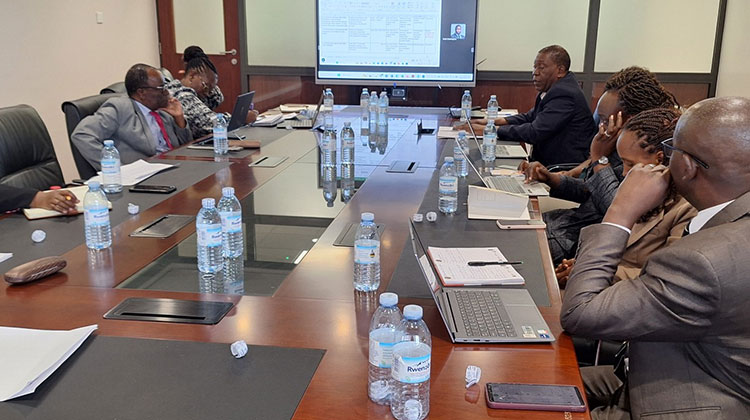
The Association of Microfinance Institutions of Uganda (AMFIU), together with the Microfinance Forum Executive, held a high-level engagement with the Ministry of Finance, Planning and Economic Development to present key policy and regulatory concerns affecting the growth and sustainability of Uganda’s microfinance sector.
Through its lobby and advocacy function, AMFIU continuously identifies and analyses emerging policy issues impacting Tier 4 microfinance institutions and SACCOs. Several pressing concerns raised by sector players were consolidated and formally presented to the Ministry for consideration and guidance. The key issues are summarized below.
- Double licensing of non-deposit taking MFIs from the financial regulator and local government -Trade licence Act
The demand and collection of trading license/operation permit fees from the microfinance institutions by Local Governments and yet the institutions have already paid license fees to the microfinance regulator is considered double taxation. This issue has been a subject of litigation in various court cases and on 6th August, 2024, the Solicitor General, in a letter to the Commission Secretary, Local Government Finance Commission, advised that bodies already paying license fees to regulatory bodies under different regulatory laws should not again pay trade license to Local Governments, as this would amount to double taxation. However, this still remains and in some instances, the premises of the institutions have been closed on grounds of non-payment of these fees.
Our Request: Written affirmation from the Solicitor General clarifying that the Tire4 institutions are already licensed by the Ministry of Finance and therefore should not also require a license from the local governments
2. Not recognizing Tier4 MFIs as financial institutions in the Income Tax Act – Income Tax Act
The Income Tax Act provides favourable tax treatment to bad debts of SFIs compared to the bad debts of Tier4 microfinance institutions and yet both entities are regulated financial service providers in Uganda who are statutorily required to make specific credit reserves / provisions for their non-performing loans.
According to the Act, Tier4 financial institutions are required to write off their debts first before these debts qualify as tax deductible expenses of the institutions whereas SFIs only have to make specific provisions for their bad and doubtful debts to qualify for tax deductions.
The Income Tax Act does not recognise / take into account the fact that Tier4 institutions also create and hold specific provisions for their bad and doubtful debts under the Tier 4 Microfinance and Money Lenders (Non-Deposit Taking Microfinance Institutions) Regulations, 2018.
Our Request:: Amending the Income Tax Act Cap 338 to recognise and provide for, as allowable deductions (for income tax purposes), the bad debts of Tier4 institutions, on the same principle on which bad debts of licensed supervised financial institutions (“SFIs”) are recognised and allowed as tax-deductible expenses of the SFIs under the Income Tax Act.
3. Retrospective Audit on MFIs/SACCOs stamp duty payment by the URA – Stamp Duty Act – Repealed
While the Stamp Duty Act was repealed beginning July 2025, URA has gone ahead to conduct retrospective audits for stamp duty payment among the Tier4 microfinance institutions dating way back to 10 years. Retrospective enforcement of stamp duty obligations risks weakening this critical sector by diverting scarce resources away from lending operations, thereby constraining access to affordable credit for vulnerable and excluded populations.
Our Request: Withdraw the retrospective enforcement of stamp duty on MFIs and SACCOs following the repeal of the Stamp Duty Act and continue to dialogue through the microfinance forum to establish fair and forward looking compliance mechanisms that align with current laws and promote the continued growth of inclusive finance.
4. SACCO regulation – Tier4 Institutions & Money Lenders Act, MDI Act and Cooperative Societies Act
The Tier4 Microfinance Institutions and Money Lenders Act gives the mandate for regulation of bigger SACCOs to Bank of Uganda. However, the Cooperative Act 2020 gives the same mandate to the ministry of cooperatives. There’s also controversy on the pronouncement by the Parliamentary session that passed the MDI Amendment Act 2023 on 16th May 2023 about the regulation of SACCOs.
Whereas some sector players have escalated the matter to the President of Uganda for intervention, the Ministry’s position remains that it will rely on formal and official communication from the appropriate authority before taking any action. As such, any pronouncements circulated through social media or informal channels are not considered binding or actionable until formally communicated through the established government processes.