
Microfinance Stakeholder Perspectives on the Protection of Sovereignty Bill, 2026
During the past week, the Association of Microfinance Institutions of Uganda (AMFIU) convened consultative discussions with its members to gather views on the proposed Protection of Sovereignty Bill, 2026. These engagements provided an important platform for stakeholders to reflect on the potential implications of the Bill on the microfinance sector.
The microfinance sector plays a vital role in advancing financial inclusion, particularly among low-income households, rural communities, and small and medium-sized enterprises (SMEs). It is within this context that members assessed how the proposed legislation may affect the sector’s operations and its ability to sustainably deliver financial services.
While the Protection of Sovereignty Bill, 2026 is framed around safeguarding national security and sovereignty, members noted that several of its provisions could have significant direct and indirect implications for the microfinance sector especially for Microfinance Institutions (MFIs) and Savings and Credit Cooperatives (SACCOs) with international linkages.
Stakeholders expressed concern that certain provisions may result in unintended consequences, potentially limiting the sector’s capacity to serve clients at the base of the economic pyramid. In particular, the broad scope of some definitions and the proposed controls on foreign funding could inadvertently restrict access to capital, partnerships, and technical support, elements that are essential for the sector’s growth, innovation, and stability.
Members also observed that the introduction of additional regulatory clauses, if not aligned with existing frameworks, could increase the compliance burden on institutions already operating under established regulatory regimes, including Anti-Money Laundering (AML) requirements.
In light of these concerns, the sector proposed the following recommendations for consideration:
- Recognition of regulated entities: Explicit recognition should be given to licensed Microfinance Institutions, SACCOs, and other regulated entities under the supervision of Bank of Uganda and the Ministry of Finance, Planning and Economic Development (Microfinance Regulatory Department), to ensure clarity and avoid unintended inclusion within restrictive provisions.
- Regulatory coherence: The respective mandates of existing regulators should be reaffirmed to prevent duplication and maintain a coherent regulatory framework.
- Harmonization with AML frameworks: Measures relating to foreign funding should be aligned with existing Anti-Money Laundering frameworks rather than introducing parallel obligations.
- Proportionate application: Clear thresholds, exemptions, or clarifications should be introduced to ensure that routine transactions and legitimate funding arrangements within the microfinance sector are not adversely affected.
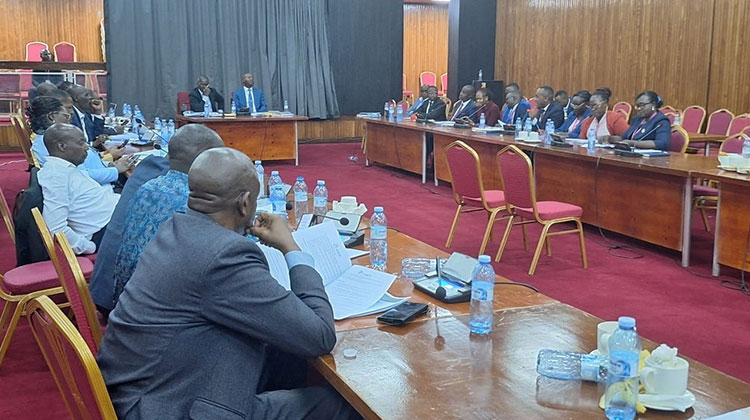
A detailed memorandum outlining these concerns and recommendations was delivered to the Legal and Parliamentary Affairs Committee during the stakeholder engagement session held on 27th April 2026 at Parliament. The microfinance sector remains optimistic that its input will be considered in the ongoing legislative process.